
IT engineering company
Software built to last beyond launch day.
PLAS Solutions GmbH designs, builds and maintains software systems — from custom applications to cloud infrastructure and the integrations that hold them together.
An engineering partner, not a vendor.
We work with organisations whose operations rely on software: tools for internal teams, customer-facing platforms and the systems that connect them.
Our focus is the full lifecycle — understanding the problem, choosing a sensible architecture, delivering in small verifiable steps and keeping the result maintainable.
Areas of technical expertise
- 01
- Application engineering
- Back-end services, APIs and web front-ends written with maintainability in mind.
- 02
- Cloud & platforms
- Infrastructure as code, containerised workloads, CI/CD and observability.
- 03
- Data & integration
- Connecting business systems, data pipelines and event-driven interfaces.
- 04
- Security practice
- Secure defaults, access control and dependency hygiene across the stack.
- 05
- Modernisation
- Incremental refactoring and migration of legacy software.
- 06
- Technical advisory
- Architecture reviews, technology selection and delivery planning.

Custom software development
When off-the-shelf products force your processes into the wrong shape, purpose-built software can fit the way your organisation actually works.
- — Requirements clarified with the people who use the system
- — Architecture sized to the problem, not the trend
- — Automated tests and code review on every change
- — Documentation that the next engineer can rely on
Cloud and infrastructure
Reproducible
Environments described as code, so staging and production stay aligned.
Observable
Logging, metrics and alerting that explain what the system is doing.
Cost-aware
Resources chosen and sized against real usage.
Recoverable
Backups and recovery procedures that are tested, not assumed.

Data and system integration
Most organisations run many systems that were never designed to talk to each other. We build the interfaces, synchronisation jobs and data flows that let information move reliably between them.
- 01Map systems, owners and data contracts
- 02Design interfaces with clear failure handling
- 03Build, monitor and document each connection

Our approach to cybersecurity
Security is treated as a property of everyday engineering work rather than a separate phase at the end.
Least privilege
Access is granted narrowly and reviewed.
Secure defaults
Configuration starts closed and is opened deliberately.
Dependency care
Third-party components are tracked and updated.
Data minimisation
Systems collect and keep only what they need.
Industries and business challenges
Operations & logistics
Replacing spreadsheets and manual hand-offs with dependable internal tools.
Professional services
Client portals, document workflows and integrations with accounting systems.
Retail & e-commerce
Connecting storefronts, inventory and fulfilment systems.
Manufacturing
Bringing production data into reporting and planning systems.
Digital products
Scaling an early product into a maintainable platform.
How delivery works
- Phase 1
Discover
Understand goals, users, systems and constraints.
- Phase 2
Shape
Agree scope, architecture and a first increment.
- Phase 3
Build
Deliver in short cycles with working software each time.
- Phase 4
Release
Deploy carefully, with monitoring and rollback in place.
- Phase 5
Sustain
Maintain, improve and hand over knowledge.
Engineering and quality principles
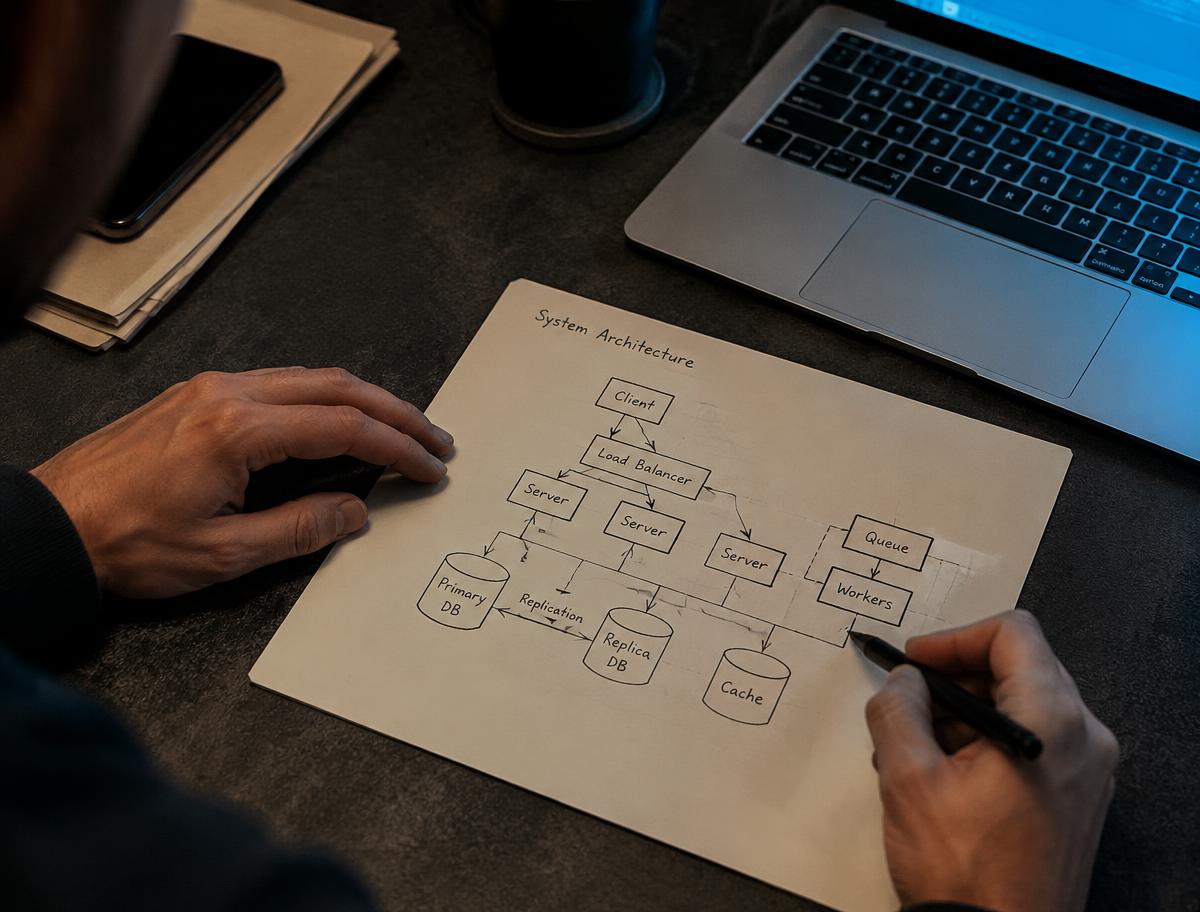
Clarity over cleverness
Code is written to be read and changed by others.
Small, reversible steps
Frequent, contained changes reduce risk and make problems easier to trace.
Tests as a safety net
Automated tests protect behaviour that matters to the business.
Honest estimates
Uncertainty is stated openly rather than hidden in a schedule.
Leave it better
Each change should leave the system easier to work with.
Collaboration and communication
Good software comes from clear conversations as much as good code.
We write things down, share progress openly, flag risks early and keep decisions traceable. You always know what is being worked on and why.

Frequently asked questions
What kind of projects does PLAS Solutions take on?
Custom software, web applications, cloud setups, integrations between existing systems, technical consulting and the modernisation of software that is already in use.
Can you work with an existing codebase?
Yes. Many engagements start with software that already exists. We begin by reading the code, the deployment and the documentation before suggesting changes.
How does an engagement usually start?
With a conversation by email about the problem, followed by a short discovery phase that clarifies scope, risks and a realistic first step.
Do you work alongside internal teams?
We can work independently or embedded with your engineers, sharing repositories, reviews and planning rituals.
Who owns the code you write?
Ownership and licensing are set out in the agreement for each engagement; we discuss this explicitly before work starts.
How do you communicate progress?
Through regular written updates, working demos and shared access to the tools where the work happens.
12 / Contact
Start with a message.
Company
PLAS Solutions GmbH
DenizYildiz@mavigrid.com